Notion: The Ultimate Education Hub

Medical School, Resources
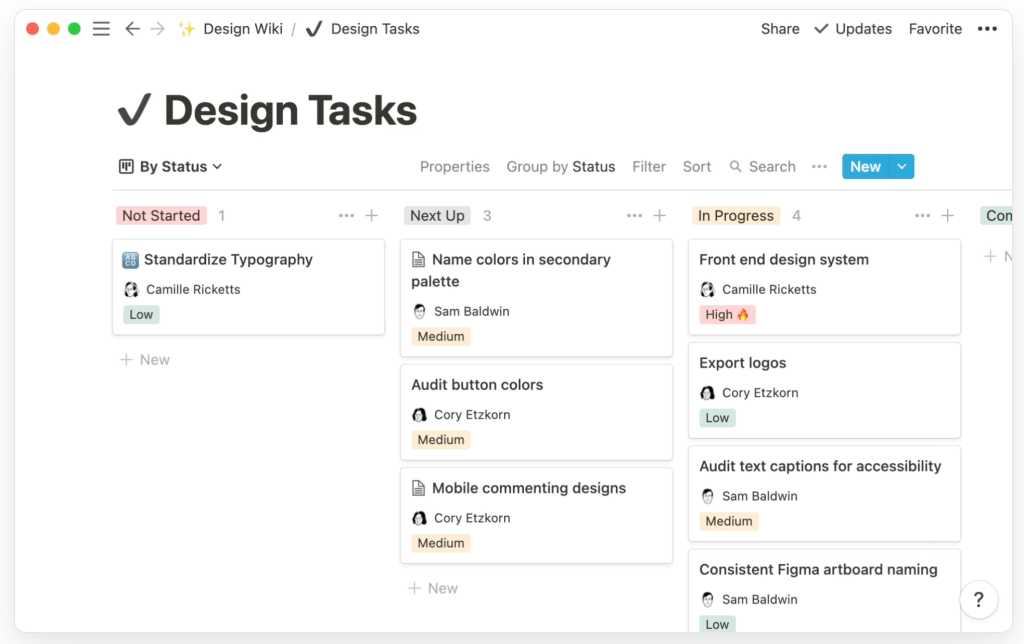
Screenshot taken from Notion (Notion Labs, Inc., 2025) for educational use.

Students often juggle assignments, notes, exams, projects, research, and extracurricular commitments—and sometimes the entire circus collapses in a heap of sticky notes and half-finished reminders. Notion EDU brings order to the chaos by offering a single digital workspace where students and teachers can create notes, databases, calendars, study dashboards, project boards, course outlines, and more. It’s flexible, customizable, and surprisingly fun to use once you get the hang of it.

How the Tool Works (Cost, Features, Learning Curve)
Notion combines documents, task lists, databases, and calendars into one space. A single page can include text, images, embedded Figma files, videos, checklists, and linked databases. For example, a “Design Wiki” might house style guides, prototypes, research notes, and stakeholder feedback side by side, with everything tagged and searchable. Users can build custom workflows for projects, from idea to final deliverable, and connect related pages with backlinks. Notion EDU is free for students and teachers with an academic email, while paid plans exist for larger teams and enterprises that need advanced permissions and security. The learning curve feels moderate at first because it’s so flexible, but most users become comfortable after experimenting with a few templates and learning how to use basic building blocks (pages, databases, and views).
Educational Benefits (student group, content, objective)
Although the “Notion for design” page speaks directly to professional design teams, the exact same features translate beautifully to education. In a design course, for example, students could maintain a shared workspace that includes a design system, project boards, sprint plans, and critique notes, all stored in Notion. In more traditional academic settings—such as undergraduate or graduate programs—students can create dashboards to track assignments, exams, readings, and research projects. Group projects become easier when everyone can see the same task list, attach files, link prototypes or articles, and keep all discussions in context. For instructors, Notion can serve as a living course hub containing the syllabus, weekly modules, readings, and assignment instructions. This supports objectives like improving organization, increasing transparency for group work, and strengthening collaboration across disciplines.

Potential Problems and How to Overcome Them
There are a few challenges to consider when using Notion in education. First, new users can feel overwhelmed by its flexibility; there is no single “correct” way to set up a workspace, which can lead to confusion or overcomplicated pages. This can be minimized by providing students with simple starter templates (for example, a basic course dashboard and a group project board) and gradually adding complexity only as needed. Second, since Notion is a cloud-based platform, reliable internet access is important for full functionality, though offline support has improved over time. Finally, collaboration can get messy if teams do not agree on naming conventions or page structure. Instructors can address this by modeling a clear, consistent layout and setting expectations about where different types of content should live within the workspace.

🔗 Learn More: https://www.notion.so/edu

References

Notion Labs, Inc. (2025). Notion for Education. Retrieved from https://www.notion.com/edu

When Straight A’s Aren’t Enough: The Internal Struggles of Starting Medical School

Blog, Medical School

The Reality Check No One Warns You About

Medical school humbles you. No matter how brilliant you were before, how effortlessly you aced exams, or how much praise you collected along the way—medical school has a way of shaking that foundation.

For many of us, school was always our strong suit. We were the top of our class, the go-to person for notes, the ones who barely had to study to get an A. And then, suddenly, we step into medical school, and everything changes.

The sheer volume of information feels insurmountable. The study methods that worked before suddenly fail. And worst of all? Those A’s we once took for granted? Now, they’re B’s… or even C’s. And that’s where the existential crisis begins.

The Identity Crisis: “Am I Even Good Enough?”

For years, academic success might have been the core of your identity. Being “the smart one” wasn’t just something you did—it was who you were. But when your usual strategies stop working, and you find yourself struggling just to keep up, it can feel like a personal failure.

Thoughts creep in:

“Maybe I don’t belong here.”

“What if I’m not as smart as I thought?”

“Did I just get lucky before?”

Imposter syndrome thrives in these moments. You look around, convinced that everyone else has it figured out while you’re drowning in lectures and Anki cards. But here’s the truth—everyone is struggling, even if they don’t show it.

Why Performance-Based Self-Worth is Dangerous

One of the biggest mindset traps medical students fall into is attaching self-worth to performance rather than effort and growth. We tie our confidence, happiness, and sense of identity to grades, test scores, and class rankings.

But here’s the reality:
– Getting a B or C in medical school does NOT mean you’re a failure.
– Struggling does NOT mean you’re not cut out to be a doctor.
– Your ability to learn, grow, and adapt matters more than your GPA.

The irony? The students who focus on effort, consistency, and resilience—not perfection—end up doing better in the long run.

How to Shift Your Mindset & Survive the Transition

So, how do you get through this? Here’s what helped me (and many others) make peace with the struggle:

1. Focus on Progress, Not Perfection

Medical school isn’t about being the best—it’s about becoming better every day. Measure success in small wins: mastering a topic, improving study habits, or simply showing up and trying.

2. Redefine What It Means to Be “Smart”

Smart isn’t about getting A’s anymore. Smart is about problem-solving, adapting, and persisting even when things are tough. In medicine, the best doctors aren’t necessarily the ones who got straight A’s—they’re the ones who learned how to think, problem-solve, and keep going.

3. Detach Self-Worth from Scores

Grades are just numbers—they don’t define your potential or your future as a physician. What matters is that you show up, do the work, and keep pushing forward.

4. Talk About It

You’re not alone. Find people who understand—friends, upperclassmen, mentors. The more we talk about these struggles, the more we normalize them.

5. Play the Long Game

Your goal isn’t to be the best student—it’s to become the best doctor you can be. And that means focusing on learning, not just performance.

Final Thoughts: You Belong Here

The transition from excelling to struggling is painful, but it’s also part of the journey. You are NOT alone in this, and you are more than your grades. Growth happens in discomfort, and every challenge you overcome is shaping you into the doctor you’re meant to be.

So if you’re in the thick of it, questioning yourself—take a deep breath. You’re doing better than you think. And no matter what your grades say, you belong here.

What I’ve learned during my first year of medical school:

Blog, Medical School

If there’s one thing I can say about my first year of medical school, it’s this: it was a rollercoaster of emotions, growth, and lessons I never saw coming. From the outside, it might look like just a lot of studying, but the reality is so much deeper. Med school isn’t just about learning how to care for others—it’s also about learning how to care for yourself.

Here are some of the biggest lessons I learned during this wild, humbling, and rewarding first year:

1. Comparison is the thief of joy

Starting medical school, I quickly realized how easy it was to compare myself to my classmates. Everyone seemed so smart, so confident, so put together. Meanwhile, I was just trying to survive my first anatomy lab without fainting.

What I’ve learned is that comparison doesn’t serve you. Everyone’s journey is different, and your success isn’t defined by how you measure up to others. It’s about how much you grow, how hard you work, and how kind you are to yourself along the way.

2. Imposter syndrome is real (but it doesn’t define you)

There were so many days I wondered, Did the admissions committee make a mistake? I’d feel like I didn’t belong, like I wasn’t smart enough to be here.

But here’s the thing: if you’re in med school, you’ve earned your spot. You worked hard to get here, and you deserve to be here just as much as anyone else. I’ve started reminding myself that it’s okay to feel uncertain or overwhelmed—that’s part of growing. The key is to focus on progress, not perfection.

3. Balance is a myth (but self-care is non-negotiable)

Trying to balance school, relationships, hobbies, and downtime sometimes felt impossible. Spoiler alert: it is. There will be weeks when school takes over, and that’s okay.

What I’ve learned, though, is that self-care isn’t optional. Whether it’s walking my dogs, calling my family, or binge-watching a show guilt-free, I’ve learned to carve out time to recharge. Even 30 minutes can make a huge difference.

4. Celebrate the small wins

Med school is full of milestones—passing your first exam, finishing a tough lab, or even just making it through a long day of lectures. I’ve learned to celebrate those moments because they add up and remind me why I started this journey in the first place.

5. It’s okay to ask for help

This was a hard one for me. I’ve always prided myself on being independent, but med school taught me that asking for help doesn’t mean you’re weak—it means you’re human. Whether it’s reaching out to a professor, seeking mental health support, or leaning on your friends, it’s okay to say, I can’t do this alone.